
市场机遇:老龄化不是负担,而是新蓝海
全球正经历前所未有的人口结构变化。联合国数据显示,到2050年,全球60岁以上人口将超过21亿,约占全球总人口的1/4。很多人把老龄化看作社会负担,但我们认为,这其实是一次巨大的经济机遇与社会进步契机。
如今的老年人更健康、更有经济基础、也更愿意尝试数字产品。然而,主流科技产品大多围绕年轻人设计,老年人常被排除在外。要真正激发“银发经济”的潜力,我们必须推动以老年人为中心的包容性创新——科技要有同理心,服务要跨界整合,生态要靠多方共建。
本文将从12个方面系统阐述,如何借助科技实现“居家养老、自主生活、持续参与”的未来老龄化社会愿景。
一、核心原则:以人为本、跨界协同、伦理先行
成功的银发科技应遵循以下三大原则:
1. 以用户为中心:充分考虑老年人在视力、听力、操作习惯、认知节奏等方面的身心特点;
2. 跨系统整合:打通健康、金融、社交、居住、交通等领域的数据壁垒,构建一体化的生活支持平台;
3. 伦理与信任并重:确保算法公平、数据隐私、系统透明,并始终坚持“人本监督”。
二、十二大科技赋能方向
1. 智能金融安全:从领养老金到自主规划
传统养老体系压力增大,AI个人养老规划平台可提供:个性化资产配置与现金流预测;实时反诈提醒(如识别异常转账);数字遗嘱与遗产管理工具。
关键前提:提升老年人数字金融素养,并建立透明可信的AI服务框架。
2. 家庭医疗革新:预防重于治疗
医疗模式正从“以医院为中心”转向“以家庭为中心”:可穿戴设备与非接触传感器持续监测健康数据;AI提前预警阿尔茨海默症、心衰等慢性病风险;远程问诊+送药上门,让“安心在家养老”成为可能。
3. 沉浸式智慧健身:有趣又安全的运动方式
VR/AR把公园、健身房“搬”到客厅,营造社交化运动体验;AI私教根据实时心率、关节状态调整训练强度;外骨骼机器人帮助中风或关节退化的老人恢复行走能力。
4. 精准营养管理:三餐即是“健康处方”
结合基因检测、肠道菌群和日常饮食记录,AI可提供:个性化营养方案;慢性病(如糖尿病、高血压)适配食谱;智能厨具自动控盐控油,操作简单便捷。
5. 认知与心理健康支持
AI聊天机器人可缓解轻度抑郁、焦虑;游戏化脑力训练APP帮助延缓认知衰退;VR疗愈场景(如漫步森林、云逛展览)缓解孤独感。
提醒:技术只是辅助,真人陪伴与社区支持不可或缺。
6. 无障碍出行与体验
AI旅行助手根据健康状况规划轻松行程;智能手杖集成定位、跌倒检测与一键呼救;VR“云游世界”让行动不便者精神出行,保持活力。
7. 跨越数字鸿沟:设计要有温度
老年人不是拒绝科技,而是怕操作复杂:界面应大字、高对比、支持语音、一键直达;推动“代际共学”,年轻人教科技,长者传授人生智慧,双向成长。
8. 终身学习与经验传承
线上平台(如Coursera、VR课堂)帮助长者学习新技能、发展爱好;退休经验也可通过数字平台传承社会——例如老工程师在线指导创业青年,实现“老有所授”。
9. 数字公益与社会参与
平台匹配退休专业人士(会计、教师等)与公益项目;线上议事厅让行动不便者参与社区事务;退休不是退出,而是转换为“价值传递者”。
10. 智能陪伴:助手,而非替代
AI伙伴可提醒吃药、播报新闻、主动聊天;坚守伦理:不伪造情感、不滥用数据、系统决策可解释;家属保持最终控制权,科技始终服务于人的尊严。
11. 政策与生态共建:合力推动
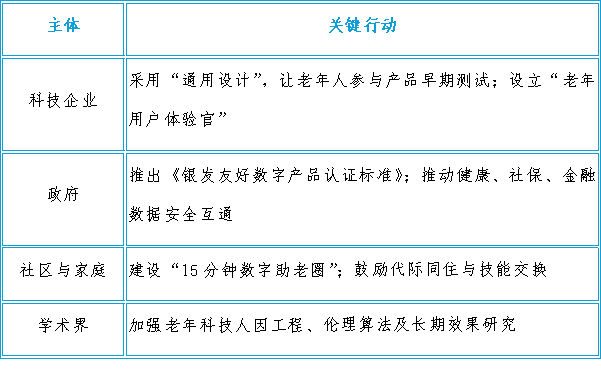
政府制定银发科技互通标准,将数字疗法纳入医保;企业通过公私合作设立孵化基金,加速产品落地;国际协作,借鉴日本照护机器人、印度远程医疗等经验;社区设立“数字助老服务站”,提供常态培训与支持。
12. 文化重塑:从“衰老”到“活力”
核心观念:“人人都会老,但并非人人都会衰退。”科技的最终使命,不是让老人“被照顾”,而是帮助他们保持选择权、参与感与尊严。
三、行动建议:共建包容性银发科技生态
结语:一场文明的进步
银发科技不仅是产品创新,更是社会价值观的重塑。当我们用同理心设计科技、用系统思维整合服务、用伦理底线守护尊严,我们构建的将不仅是一个“适老”社会,更是一个全民共享、终身成长、相互照亮的文明共同体。
老龄化趋势不可逆转,但“衰老”可以被重新定义。未来已来——让我们携手,助力每一位长者活出精彩、自在与尊严。
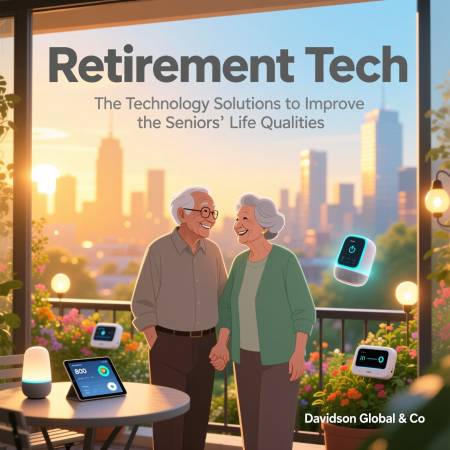
The Silver Economy: Harnessing Technology for a New Era of Aging
The global demographic shift toward an aging population—often termed the “Silver Tsunami”—is not a distant future trend. It is a present-day reality reshaping economies, healthcare systems, and social structures worldwide. By 2030, nearly one in five Americans will be over 65, a pattern mirrored across developed and emerging nations. This transformation presents one of the most significant market opportunities and societal challenges of our time. Yet, much of the current discourse on aging remains mired in outdated narratives of decline and dependency. It is time to reframe the conversation: older adults are not a problem to be solved, but a dynamic demographic driving demand for innovation, engagement, and purpose.
What sets this movement apart is the convergence of aging and technology. Today’s seniors are more connected, active, and digitally curious than any previous generation. They are not passive recipients of care but active participants in a rapidly evolving ecosystem of technology-enabled solutions. From AI-driven financial planning and telehealth to smart fitness and precision nutrition, technology is rewriting the script of retirement. This is not about making existing tools more accessible—it is about reimagining products and services with older adults as primary stakeholders.
Key Pillars of the Retirement Tech Revolution
Several domains are experiencing particularly transformative innovation:
1. Financial Security in the Digital Age
The shift from pensions to self-directed retirement plans has created a pressing need for intelligent financial tools. AI-powered platforms now offer dynamic, personalized financial planning that adapts to longer, less predictable retirement horizons. These systems go beyond portfolio management to include fraud detection, estate planning, and real-time spending analysis. In emerging markets, mobile-first fintech platforms are enabling micro-investments and informal savings, extending financial inclusion to previously underserved seniors.
2. Healthcare: From Reactive to Proactive
The future of senior healthcare lies outside the hospital—in homes, wearables, and virtual clinics. Telehealth has evolved from a pandemic stopgap into a permanent care model, integrating AI diagnostics, continuous monitoring, and personalized treatment protocols. Wearables now track everything from heart rhythms to blood glucose, enabling early intervention and reducing hospitalizations. Smart home systems detect falls, monitor medication adherence, and adjust environments in real time—all while preserving independence.
3. Cognitive and Emotional Well-Being
Mental health is gaining long-overdue attention in the aging conversation. Digital therapeutics, VR-based therapy, and AI-powered companionship tools are providing scalable, stigma-free support for conditions like depression and anxiety. Brain-training platforms backed by neuroscience are helping delay cognitive decline, while neurofeedback technology is moving from clinics into homes. These tools are not replacements for human connection but powerful supplements that extend the reach of mental health professionals.
4. Lifelong Learning and Civic Engagement
Retirement is increasingly a period of reinvention, not withdrawal. Online learning platforms are adapting interfaces and content for older adults, enabling them to acquire new skills, explore passions, and stay intellectually engaged. Similarly, digital volunteerism platforms are matching retirees with meaningful civic and social opportunities, leveraging their expertise for global impact. This redefinition of purpose is critical to emotional health and social integration.
Strategic Imperatives for Business and Policy Leaders
To capitalize on this shift, leaders must adopt a senior-first innovation mindset. This involves:
· Empathetic Design: Technology must be intuitive, voice-enabled, and adaptable to varying physical and cognitive abilities.
· Interoperability: Seamless integration across health, financial, social, and smart home systems is non-negotiable.
· Public-Private Collaboration: Governments, insurers, and tech firms must align incentives to accelerate adoption and scale.
· Digital Inclusion: Access to affordable broadband and digital literacy training is as essential as the technology itself.
· Ethical AI Governance: As AI becomes more embedded in daily life, transparency, bias mitigation, and data privacy must be prioritized.
Conclusion: A Call to Action
The Silver Economy represents more than a market opportunity—it is a chance to redefine what it means to age. The technologies we develop today will determine whether later life is a period of growth and contribution or one of isolation and limitation. For business leaders, this means recognizing older adults as a core customer segment. For policymakers, it means creating regulatory and financial frameworks that support innovation while protecting rights. For all of us, it means embracing a future where aging is not feared, but embraced as a natural, dynamic stage of life.
The era of passive retirement is over. The future belongs to those who see aging not as an endpoint, but as a new beginning.
| 本文由戴维德森国际咨询与鼎韬咨询联合研究发布,英文原版已通过亚马逊非AI检测系统认证,中文翻译与插图得到AI辅助。
| 原文链接:https://www.amazon.com/dp/B0FF3LJ296