
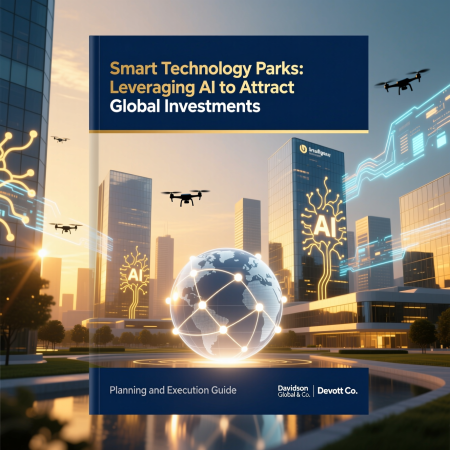
本报告旨在为传统工业园区向人工智能驱动的创新生态转型,提供一套既具战略视野、又切实可行的完整路径,现已在亚马逊公开发售。面向政府决策者、投资者、园区开发商与企业管理者,本报告系统阐述了在全球范围(包括美国及其他国际市场)规划、建设或升级科技园区所需的战略框架、关键技术、运营模式与治理机制。报告内容共十二章,深入解读如何通过人工智能(AI)、物联网(IoT)、大数据及智能基础设施,将科技园区打造为吸引全球资本、高端人才和可持续经济增长的核心引擎。
01 从工业区到智能生态:园区的根本变革
本报告首先梳理科技园区的发展历程:从过去依赖土地、基建与廉价劳动力的工业区,转向以数据为驱动、以智能为核心的生态系统。在新一代园区中,数字技术已深度融入建筑、能源、交通及办公空间,如同园区的“神经网络”。人工智能、物联网、边缘计算、数字孪生、5G/6G通信与模块化建筑等技术,共同构建出高度互联、可自主优化的园区基础。新加坡“启奥城”与北京中关村等案例表明,真正的智能园区不仅能提升创新效率与运营韧性,更将成为全球投资者重点布局的战略节点。
02 智能融合:实体空间与数字系统的协同设计
智能园区的成功,关键在于实现物理环境与数字系统的无缝融合。报告详解支撑该融合的四大技术支柱:
(1)物联网传感器:实时收集环境、设备及人流数据;
(2)边缘计算:实现本地毫秒级响应,保障关键业务低延迟;
(3)数字孪生:构建园区虚拟镜像,支持模拟测试与预测性维护;
(4)模块化架构:确保基础设施具备弹性扩展与持续升级的能力。
以美国“三角研究园”和韩国松岛新城为例,其成功不仅源于技术领先,更在于整体设计注重可扩展性、系统互通性与长期可持续性。
03 以“智能溢价”吸引全球资本
人工智能正改变园区的投资逻辑。从选址评估、投资者画像、资产定价到激励政策设计,AI分析工具可大幅提升决策精准度。通过预测模型,园区能提前识别高潜力产业与优质投资方;借助风险模拟,可量化评估政策或市场波动的影响,并动态优化扶持方案。这种基于数据与算法的治理能力,赋予园区独特的“智能溢价”——不仅提升资产价值,更易赢得国际资本的长期信任。
04 超越空间:构建全球创新生态
如今的智能园区已超越传统地产范畴,成为真正的创新生态。AI在其中扮演“智能催化器”角色:在孵化环节,AI可评估创业团队潜力,智能匹配导师与资源;在投融资领域,AI平台对接全球风投,拓宽企业融资渠道;在知识产权方面,AI协助监测侵权风险、优化专利布局、推动技术商业化。
同时,可持续发展已成为标配。越来越多园区借助AI规划碳中和路径、部署智能电网、推动零废弃运营,将绿色理念转化为实际竞争力。
05 人才为核心:营造“智能舒适区”
无论技术如何发展,人才始终是园区成功的关键。AI可从多角度助力人才战略:预测地区技能缺口,提前规划培训体系;为员工提供个性化学习与职业发展路径;通过AI学习平台提升终身学习效率;推动包容性招聘与人性化办公环境设计。
报告中提出“智能舒适区”概念——即利用AI动态调节光照、温湿度、空气质量甚至空间规划,打造最利于专注、协作与创意的工作环境。这类以人为本的园区,正日益成为全球高端人才的首选。
06 绿色智能:可持续即竞争力
环保可持续已不仅是责任,更是差异化优势。AI在绿色运营中作用显著:动态优化建筑与设备的能耗;智能调度太阳能、风能等清洁能源;构建园区级智能电网,提升能源效率与韧性;实现垃圾自动分类、回收与资源化利用;自动生成ESG报告,确保合规透明。
更进一步,AI可赋能循环经济模式,通过追踪产品全生命周期数据,实现废料最小化与资源价值最大化,兼顾成本效益与绿色声誉。
07 数据即资产:打造园区“数字生命线”
在智能园区中,数据是真正的“命脉”。报告强调,园区应主动构建数据生态:建立匿名化数据交易市场,挖掘数据商业价值;提供预测分析服务,辅助园区企业决策;建立隐私保护与高效共享并重的数据协作机制;配套完善的网络安全与数据治理体系。
这些能力不仅能提升园区运营效率,还可衍生出新服务与收入来源,增强区域数字经济竞争力。
08 全球推广:精准传播园区价值
在全球竞争中,园区需要主动出击。借助AI赋能的营销工具——如舆情分析、多语言内容生成、受众行为预测等,园区可为不同国家与投资群体定制传播策略。成功的国际品牌建设,离不开对当地文化的理解与本地化表达。声誉管理与文化适配,已成为园区“走出去”的关键软实力。
09 智慧治理:在合规中持续创新
面对日益复杂的监管环境,智能园区需坚持“合规先行”。AI可自动追踪全球法规变化,支持跨境政策协调,简化合规认证,并预警潜在风险。报告中指出,透明、可信、有韧性的治理体系是园区长远发展的基础——技术再先进,若缺乏制度信任,也难以行稳致远。
10 全球经验,本地融合
世界级园区的成功,从不简单复制模板,而是将全球最佳实践与本地优势有机结合——无论是产业基础、科研资源,还是区位或政策特色。AI在此过程中可作为“战略导航”,帮助园区找准差异化赛道、推动国际合作、助力产业集群向高附加值升级。
11 落地实施:从蓝图到未来
最后聚焦“如何做”,提供从可行性分析、多元融资、利益相关方协作,到绩效设定与危机应对的全套实施方案。面向未来,作者呼吁园区提前布局量子计算、智能机器人、绿色科技等前沿方向,始终秉持开放、包容、以人为本、面向未来的发展理念。
01 从工业区到智能生态:园区的根本变革
本报告首先梳理科技园区的发展历程:从过去依赖土地、基建与廉价劳动力的工业区,转向以数据为驱动、以智能为核心的生态系统。在新一代园区中,数字技术已深度融入建筑、能源、交通及办公空间,如同园区的“神经网络”。人工智能、物联网、边缘计算、数字孪生、5G/6G通信与模块化建筑等技术,共同构建出高度互联、可自主优化的园区基础。新加坡“启奥城”与北京中关村等案例表明,真正的智能园区不仅能提升创新效率与运营韧性,更将成为全球投资者重点布局的战略节点。
02 智能融合:实体空间与数字系统的协同设计
智能园区的成功,关键在于实现物理环境与数字系统的无缝融合。报告详解支撑该融合的四大技术支柱:
(1)物联网传感器:实时收集环境、设备及人流数据;
(2)边缘计算:实现本地毫秒级响应,保障关键业务低延迟;
(3)数字孪生:构建园区虚拟镜像,支持模拟测试与预测性维护;
(4)模块化架构:确保基础设施具备弹性扩展与持续升级的能力。
以美国“三角研究园”和韩国松岛新城为例,其成功不仅源于技术领先,更在于整体设计注重可扩展性、系统互通性与长期可持续性。
03 以“智能溢价”吸引全球资本
人工智能正改变园区的投资逻辑。从选址评估、投资者画像、资产定价到激励政策设计,AI分析工具可大幅提升决策精准度。通过预测模型,园区能提前识别高潜力产业与优质投资方;借助风险模拟,可量化评估政策或市场波动的影响,并动态优化扶持方案。这种基于数据与算法的治理能力,赋予园区独特的“智能溢价”——不仅提升资产价值,更易赢得国际资本的长期信任。
04 超越空间:构建全球创新生态
如今的智能园区已超越传统地产范畴,成为真正的创新生态。AI在其中扮演“智能催化器”角色:在孵化环节,AI可评估创业团队潜力,智能匹配导师与资源;在投融资领域,AI平台对接全球风投,拓宽企业融资渠道;在知识产权方面,AI协助监测侵权风险、优化专利布局、推动技术商业化。
同时,可持续发展已成为标配。越来越多园区借助AI规划碳中和路径、部署智能电网、推动零废弃运营,将绿色理念转化为实际竞争力。
05 人才为核心:营造“智能舒适区”
无论技术如何发展,人才始终是园区成功的关键。AI可从多角度助力人才战略:预测地区技能缺口,提前规划培训体系;为员工提供个性化学习与职业发展路径;通过AI学习平台提升终身学习效率;推动包容性招聘与人性化办公环境设计。
报告中提出“智能舒适区”概念——即利用AI动态调节光照、温湿度、空气质量甚至空间规划,打造最利于专注、协作与创意的工作环境。这类以人为本的园区,正日益成为全球高端人才的首选。
06 绿色智能:可持续即竞争力
环保可持续已不仅是责任,更是差异化优势。AI在绿色运营中作用显著:动态优化建筑与设备的能耗;智能调度太阳能、风能等清洁能源;构建园区级智能电网,提升能源效率与韧性;实现垃圾自动分类、回收与资源化利用;自动生成ESG报告,确保合规透明。
更进一步,AI可赋能循环经济模式,通过追踪产品全生命周期数据,实现废料最小化与资源价值最大化,兼顾成本效益与绿色声誉。
07 数据即资产:打造园区“数字生命线”
在智能园区中,数据是真正的“命脉”。报告强调,园区应主动构建数据生态:建立匿名化数据交易市场,挖掘数据商业价值;提供预测分析服务,辅助园区企业决策;建立隐私保护与高效共享并重的数据协作机制;配套完善的网络安全与数据治理体系。
这些能力不仅能提升园区运营效率,还可衍生出新服务与收入来源,增强区域数字经济竞争力。
08 全球推广:精准传播园区价值
在全球竞争中,园区需要主动出击。借助AI赋能的营销工具——如舆情分析、多语言内容生成、受众行为预测等,园区可为不同国家与投资群体定制传播策略。成功的国际品牌建设,离不开对当地文化的理解与本地化表达。声誉管理与文化适配,已成为园区“走出去”的关键软实力。
09 智慧治理:在合规中持续创新
面对日益复杂的监管环境,智能园区需坚持“合规先行”。AI可自动追踪全球法规变化,支持跨境政策协调,简化合规认证,并预警潜在风险。报告中指出,透明、可信、有韧性的治理体系是园区长远发展的基础——技术再先进,若缺乏制度信任,也难以行稳致远。
10 全球经验,本地融合
世界级园区的成功,从不简单复制模板,而是将全球最佳实践与本地优势有机结合——无论是产业基础、科研资源,还是区位或政策特色。AI在此过程中可作为“战略导航”,帮助园区找准差异化赛道、推动国际合作、助力产业集群向高附加值升级。
11 落地实施:从蓝图到未来
最后聚焦“如何做”,提供从可行性分析、多元融资、利益相关方协作,到绩效设定与危机应对的全套实施方案。面向未来,作者呼吁园区提前布局量子计算、智能机器人、绿色科技等前沿方向,始终秉持开放、包容、以人为本、面向未来的发展理念。
Building the Cognitive Ecosystem: How AI-Driven Technology Parks Are Redefining Global Investment
The global economic landscape is undergoing a seismic shift. In an era defined by artificial intelligence, IoT, and data, the traditional industrial park—a relic of the 20th century—is being systematically reinvented. The new paradigm is the AI-powered Smart Technology Park: a dynamic, cognitive ecosystem designed not just to house businesses, but to foster innovation, attract global capital, and drive sustainable economic growth. For policymakers, investors, and corporate leaders, understanding and leveraging this model is no longer a strategic advantage; it is a strategic imperative.
What sets this new generation of technology parks apart from their predecessors and similar concepts discussed across industry publications is their foundational shift from passive infrastructure to active, intelligent participation. Unlike traditional estates that offered little more than land and utilities, or even modern tech parks that provide high-speed internet, these are cognitive environments. They are built on a converged physical-digital infrastructure that learns, adapts, and optimizes in real-time.
The Architecture of Intelligence: Beyond Bricks and Mortar
The core differentiator lies in the architecture. While many publications discuss smart cities or digital hubs, the unique value proposition of the AI-driven park is its integrated "stack" of intelligent systems:
· Digital Twins: Virtual replicas of the entire park allow for predictive maintenance, scenario planning, and risk mitigation before a single physical asset is affected.
· Cognitive Infrastructure: Systems that use AI and machine learning to anticipate tenant needs, optimize energy consumption dynamically, and enhance user experience autonomously.
· Modular and Adaptable Design: The infrastructure is built not for today's technology, but for tomorrow's—be it quantum computing, advanced robotics, or technologies yet to be conceived. This future-proofing is a critical, yet often overlooked, element of long-term viability.
This intelligent backbone creates what can be termed an "Intelligence Premium." Properties within these parks command higher valuations and attract more discerning investors because they offer tangible operational benefits: reduced downtime, lower energy costs, and data-driven insights that directly impact a tenant's bottom line.
The Strategic Engine: Attracting Investment and Mitigating Risk
The primary goal of these parks is to act as magnets for global investment. They achieve this through AI-driven strategies that move beyond generic marketing:
· Precision Targeting: AI tools analyze global datasets for geospatial, demographic, and market trends to identify the ideal location and the most compatible investors and tenants, moving beyond gut-feel decisions to data-driven precision.
· Predictive Risk Mitigation: By employing digital twins and predictive analytics, park operators can model the impact of everything from regulatory changes and economic downturns to natural disasters. This ability to de-risk an environment is a powerful lure for capital, particularly for international investors navigating unfamiliar markets.
· Optimized Financial Engineering: AI can simulate the impact of tax incentives and financial structures, allowing governments and developers to create compelling, fiscally responsible packages that attract high-value industries without eroding public funds.
Cultivating Innovation, Not Just Tenancy
Perhaps the most significant departure from standard models is the focus on creating a living Global Innovation Ecosystem. These parks are engineered to be crucibles of collaboration. AI-powered incubators identify and nurture high-potential startups by analyzing their market fit and growth trajectory. Collaborative frameworks seamlessly connect these startups with corporate R&D departments and academic institutions, breaking down traditional silos.
Furthermore, AI streamlines venture capital matchmaking, connecting startups with the most suitable global investors based on aligned interests and risk profiles. This creates a vibrant, self-sustaining cycle of innovation, funding, and commercialization that is far more powerful than a simple collection of companies in one location.
Operationalizing the Vision: A Blueprint for Success
The implementation of such a park requires a disciplined, phased approach. Key steps include:
1. Strategic Repurposing or Greenfield Development: Conducting AI-augmented feasibility studies to assess the economic, environmental, and technological viability of a site.
2. Stakeholder Synergy: Employing robust change management and continuous engagement with governments, investors, tenants, and local communities, using AI-driven tools to ensure alignment and communication.
3. Performance-Driven Operation: Establishing a robust KPI framework monitored by AI, tracking everything from energy efficiency and tenant satisfaction to direct economic impact, enabling continuous data-driven improvement.
The Future is Cognitive
The forward-looking technology park is already preparing for the next wave of disruption—quantum computing, advanced robotics, and "innovation-as-a-service" business models. The parks that will lead in the coming decades are those that ingrain a culture of adaptability and strategic foresight, positioning themselves not just as locations, but as essential partners in the global digital economy.
In conclusion, the evolution from industrial estate to cognitive ecosystem represents the future of economic development. By leveraging AI as the central nervous system, these Smart Technology Parks offer a proven, scalable model for attracting global investments, fostering groundbreaking innovation, and achieving sustainable, long-term growth. For leaders aiming to secure a competitive edge in the 21st century, the mandate is clear: build with intelligence.
| 本文由戴维德森国际咨询与鼎韬咨询联合研究发布,英文原版已通过亚马逊非AI检测系统认证,中文翻译与插图得到AI辅助。如需购买完整报告或了解更多信息,欢迎随时通过公众号后台私信与我们联系。
| 原文链接:https://www.amazon.com/dp/B0DZHHBJSS